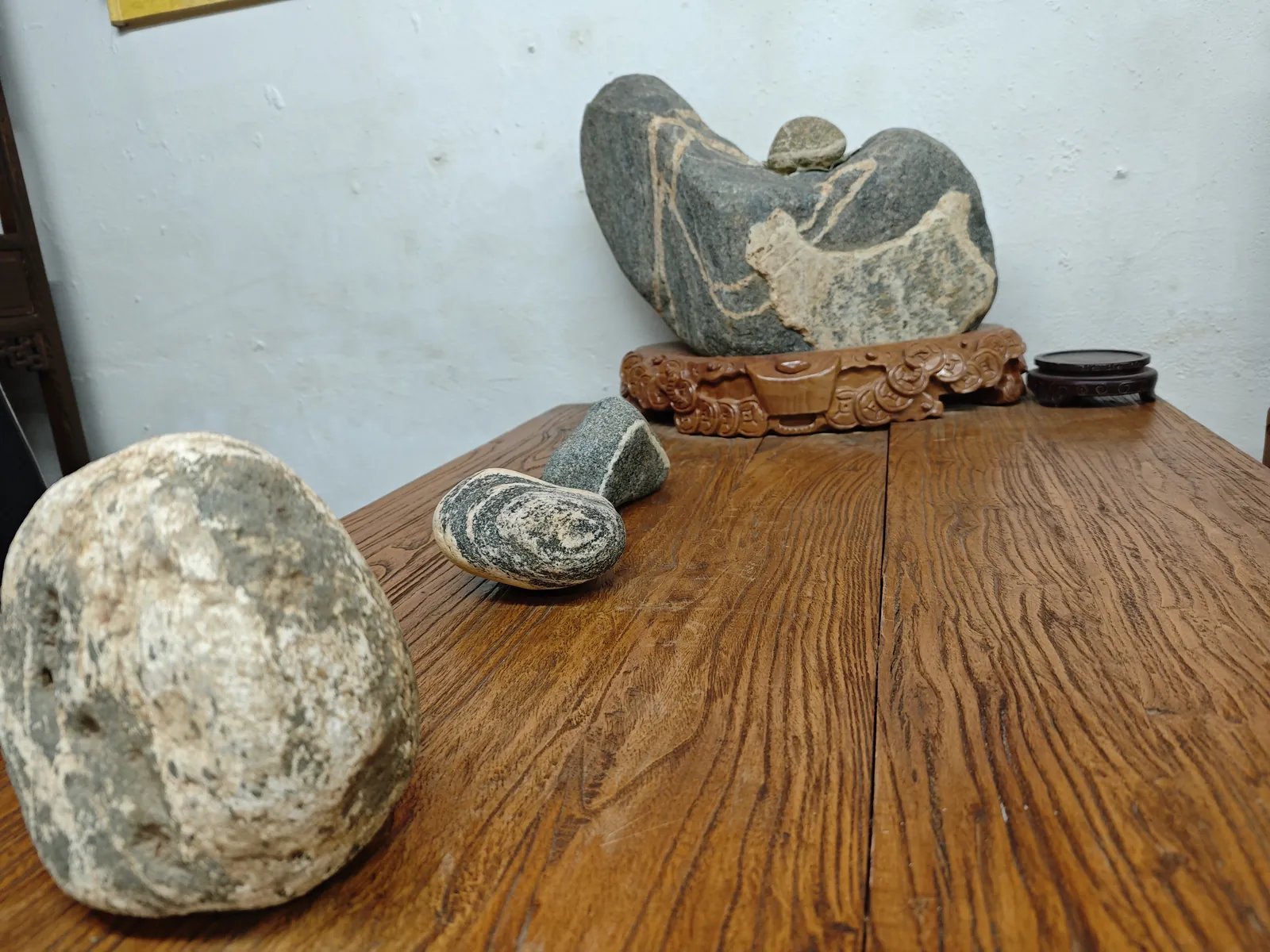
Stones do not talk, but they are worth a slow look. The folk stories behind Mount Tai stone and Shigandang.
IMG-16
800 × 600
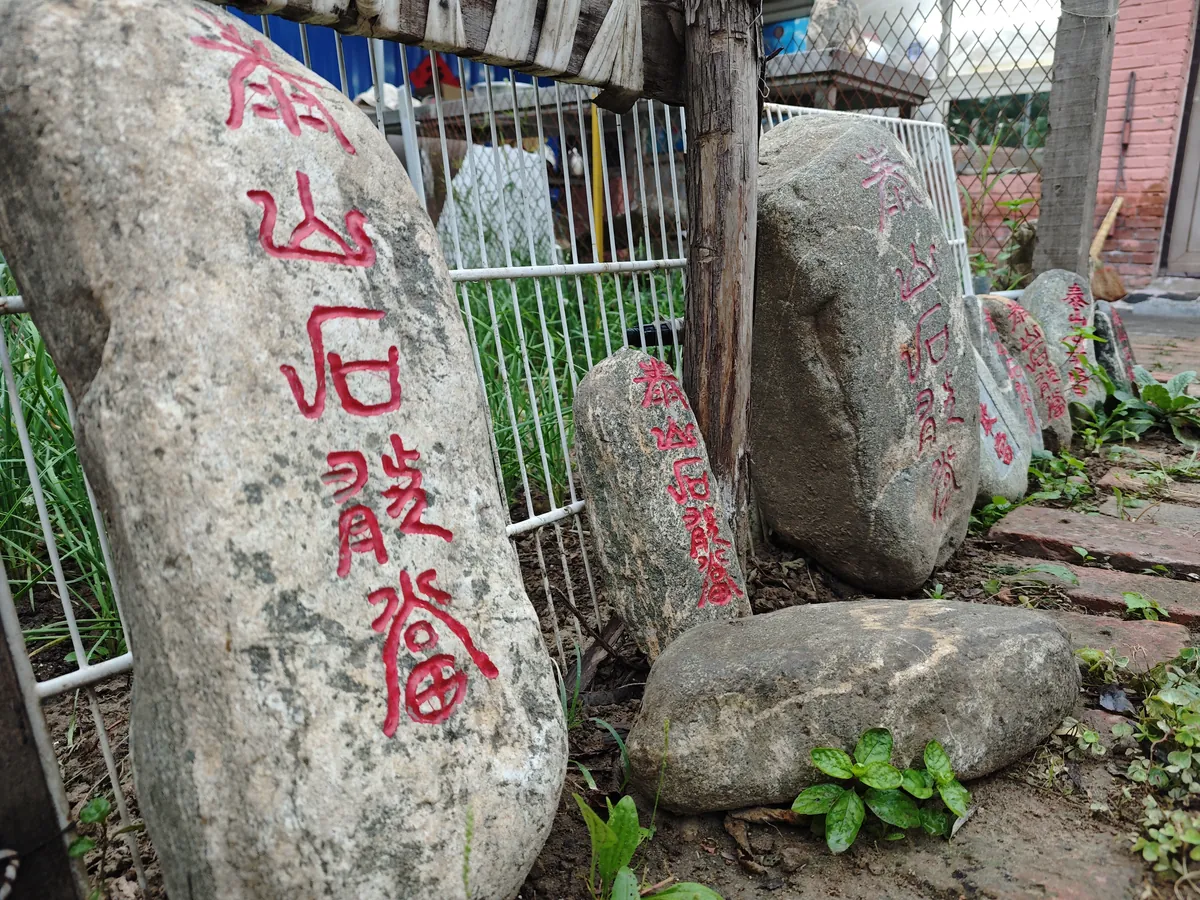
A stele carved with "Shigandang" / stele standing by a lane entrance
Priority P1
Where Shigandang comes from
The three characters Shi Gan Dang appear in a Han-dynasty school primer, in a rhyming line about brave men. That is the earliest written trace of a custom: a stone standing guard at a Chinese door.
In the old custom, a tablet inscribed with the characters was placed at a house gate, an alley mouth or a bridgehead, as a guard against misfortune. The custom traveled. The same tablets can still be seen in Taiwan, in Okinawa, and in older Chinese neighborhoods overseas. In 2006 the Shigandang custom was added to China's first national list of intangible cultural heritage.
A plain stone, carrying two thousand years of ordinary families' wish for peace.
IMG-17
800 × 600
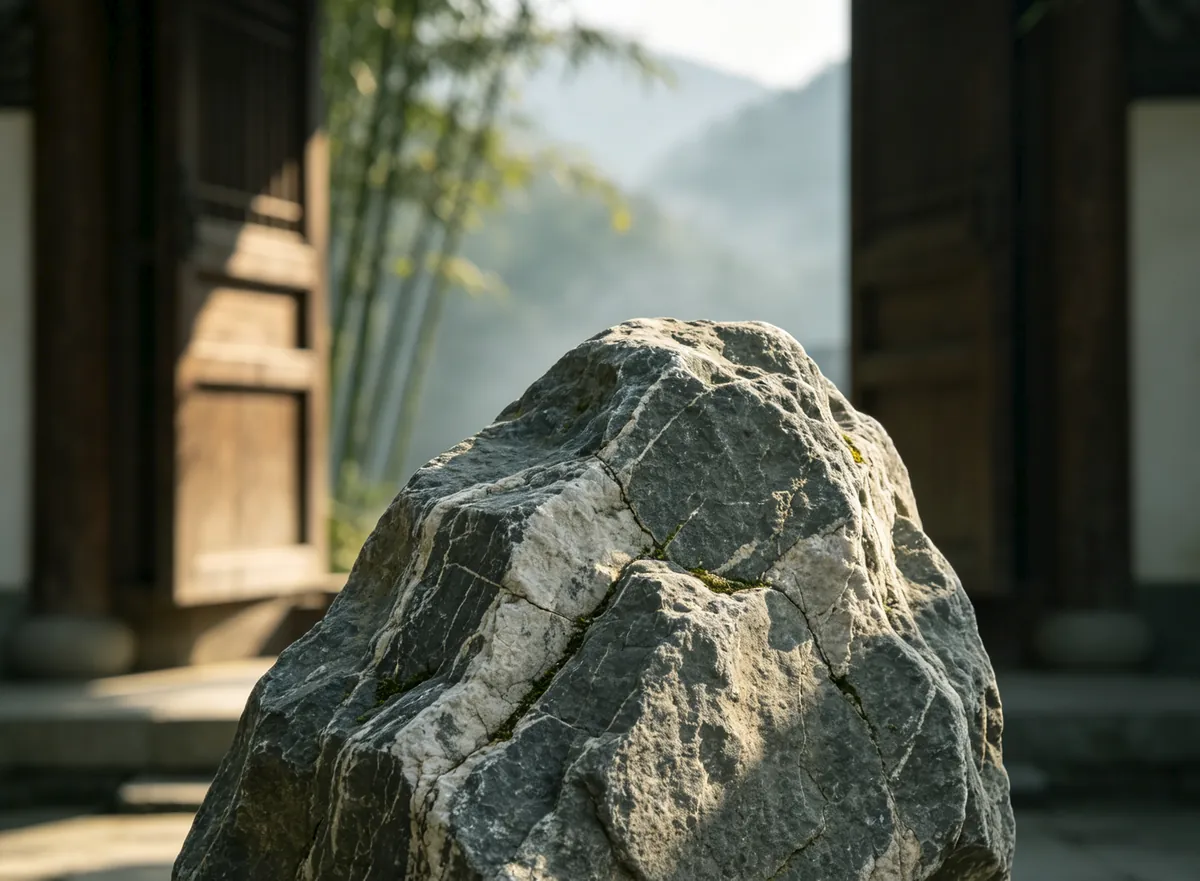
Stone guardian at the doorway / folk tradition of household protection
Priority P2
Mount Tai and the culture of peace
Mount Tai is the first of the Five Great Mountains. Beginning with Qin Shi Huang in 219 BC, emperors climbed it to perform the fengshan rite, a ceremony reporting to heaven on the state of the realm. The mountain also gave the language a phrase: steady as Mount Tai.
The rite was the grandest an emperor could perform. But the wish it carried did not stay at the top. In folk custom, a stone from Mount Tai placed by the home was said to steady the household. "When Mount Tai is at peace, all under heaven is at peace," the old saying runs.
We read this today as culture. What it reflects is simple: a family's wish for a quiet, stable home.
IMG-18
800 × 600
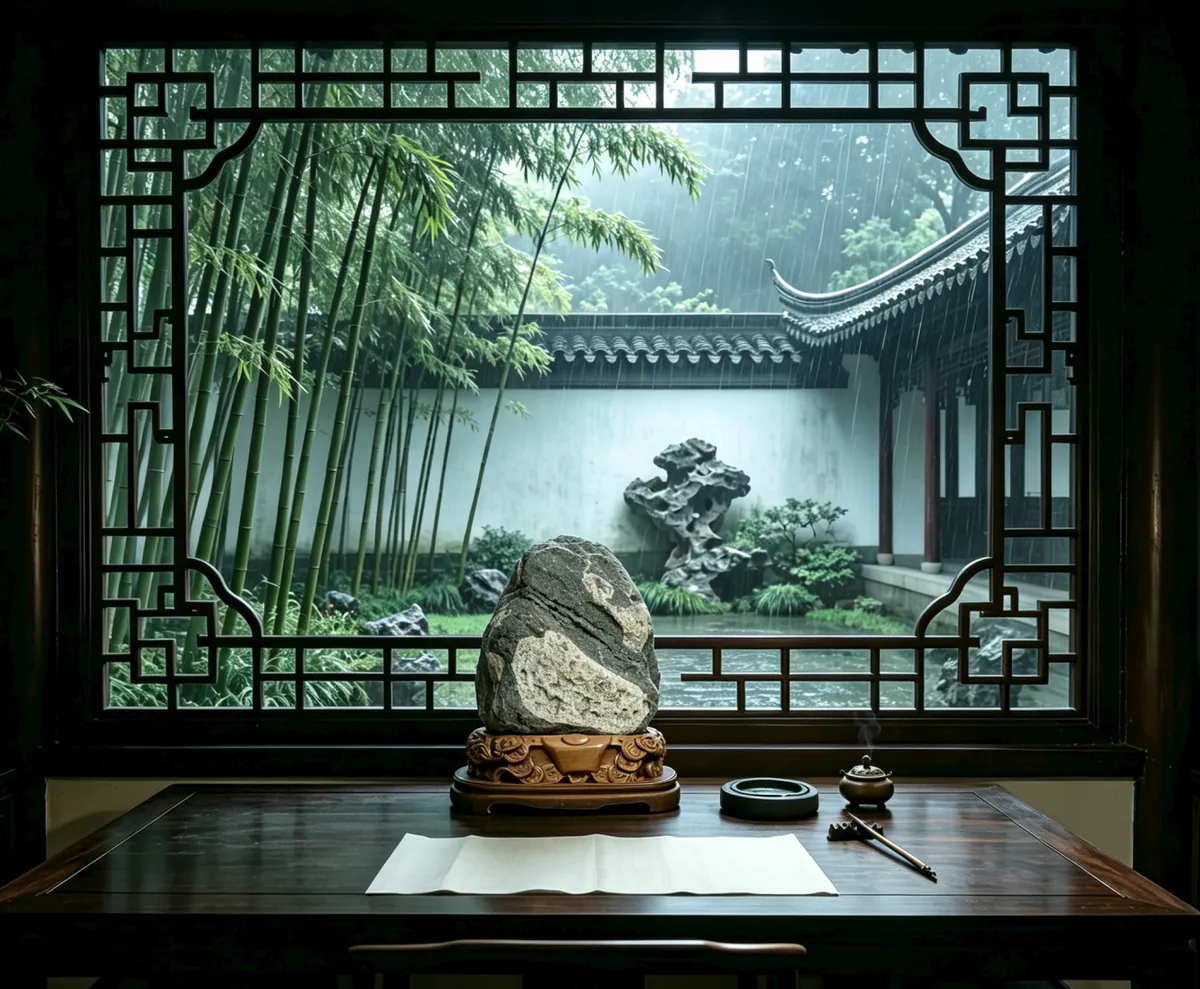
Desk stone / the quiet pleasure of stone appreciation
Priority P2
The scholar's love of stones
The Chinese have kept stones for a very long time. Since the Tang dynasty, scholars placed them on their desks as "scholar stones," and gardens were built around them.
The classic criteria for a fine stone run to four: lean, perforated, translucent, wrinkled. Mount Tai stone does not chase that standard. Its beauty is plain and heavy: rough texture, old patina, a form shaped by hundreds of millions of years of weather. The Song painter Mi Fu is said to have bowed to a strange rock and called it brother. A stone is a companion before it is a decoration.
The tribute records in the ancient text Shangshu already list "remarkable stones from the valleys of Dai," and Dai is Mount Tai. The mountain's stones have been leaving home for a long time. Chinese families abroad who keep one are keeping a very old habit.